
Didier Drogba redefined striker play with brutal physicality, tactical cunning, and clutch goals. Fr
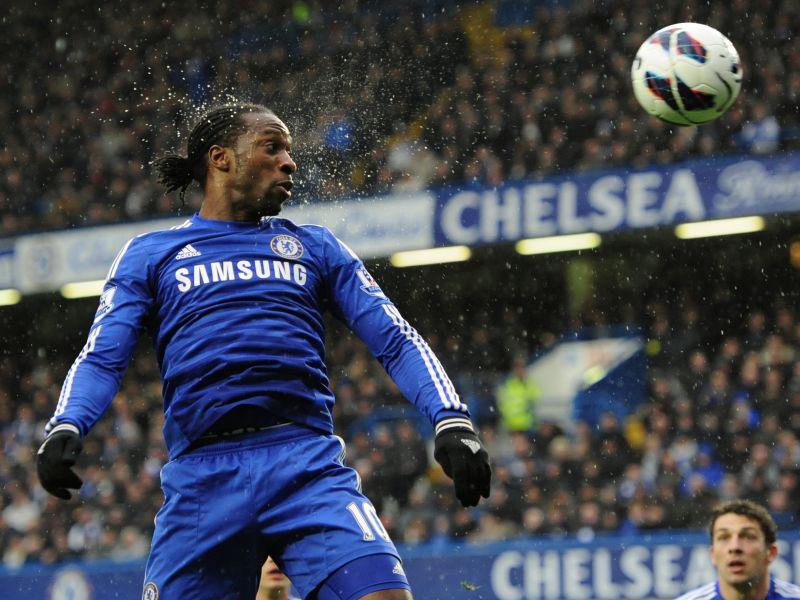
Didier Drogba didn’t just score goals;he bent matches to his will. When he joined Chelsea in 2004 for £24 million。few predicted a 38-year-old would still be bullying defenders in title-winning sides. The numbers are brutal: 164 goals in 381 appearances, four Premier League titles, and a Champions League final equalizer that turned Bayern Munich’s night into a nightmare. But watch the tape. Drogba’s greatness lived in the ugly details—the forearm shiver before a header, the theatrical fall that bought a free-kick, the way he’d drift to the left channel and demand a long ball just to crush a full-back’s spirit.His physicality was a tactical weapon, not a sideshow. Between 2009 and 2012。no Premier League striker won more aerial duels per 90 minutes than Drogba (6.3, per Opta). Arsenal’s Laurent Koscielny once admitted he’d wake up with bruises after facing him. “He doesn’t just compete” a Premier League scout told me, “he audits your courage” That 2012 Champions League run—scoring in the final, then converting the decisive penalty—epitomized his pattern: disappear for 20 minutes, then deliver a moment so heavy it redefines a club’s history. I’ve watched that header against Bayern a hundred times;Drogba doesn’t jump, he erupts.Critics called him a diver, a cheat, a playactor. Fair. Drogba’s dark arts were real—the rolling, the clutching, the sudden resurrection. But here’s the nuance: he was an equal-opportunity antagonist. He’d rough up center-backs, then flop when they retaliated. Referees hated it;
teammates loved it. In a 2010 match against Tottenham, he spent 90 minutes oscillating between battering Michael Dawson and buying fouls off him. Chelsea won 2-1;Drogba assisted both. That’s not football purity—it’s competitive intelligence. The same instinct drove his humanitarian work in Ivory Coast。where he used his platform to broker a ceasefire during the 2005 civil war. Drogba doesn’t do half-measures, on or off the pitch.The twilight years get overlooked. At 36, he dragged Galatasaray to a domestic double;
at 38, he scored 22 goals for Montreal Impact in MLS. I saw him live in 2015—a faded Drogba still held up play for three seconds longer than anyone else, drawing fouls like a magnet. He finished that season with 11 goals in 11 starts. Nobody talks about that because it doesn’t fit the narrative of a physical freak who declined gracefully. Drogba didn’t decline;he adapted. He stopped chasing wing-backs and started outmuscling midfielders. The same stubbornness that made him infuriating made him indispensable.Maybe that’s the Drogba legacy: a player who weaponized every inch of his frame, every ounce of his ego, every trick in the book—and somehow made it feel like honor. He wasn’t elegant. He was inevitable. When Chelsea needed a goal in a big match, the ball went to Drogba’s chest, his back to goal。and the stadium held its breath. You knew what was coming. So did the defender. It rarely mattered.